When Recursive Models Finish Computing
When does another reasoning step help, and when has a model settled on an answer? I study the internal trajectories and stability of recursive neural models to understand how their computation comes to an end.
Machine Learning Researcher
Postdoctoral Fellow · Weinberg Theory Center
The University of Texas at Austin
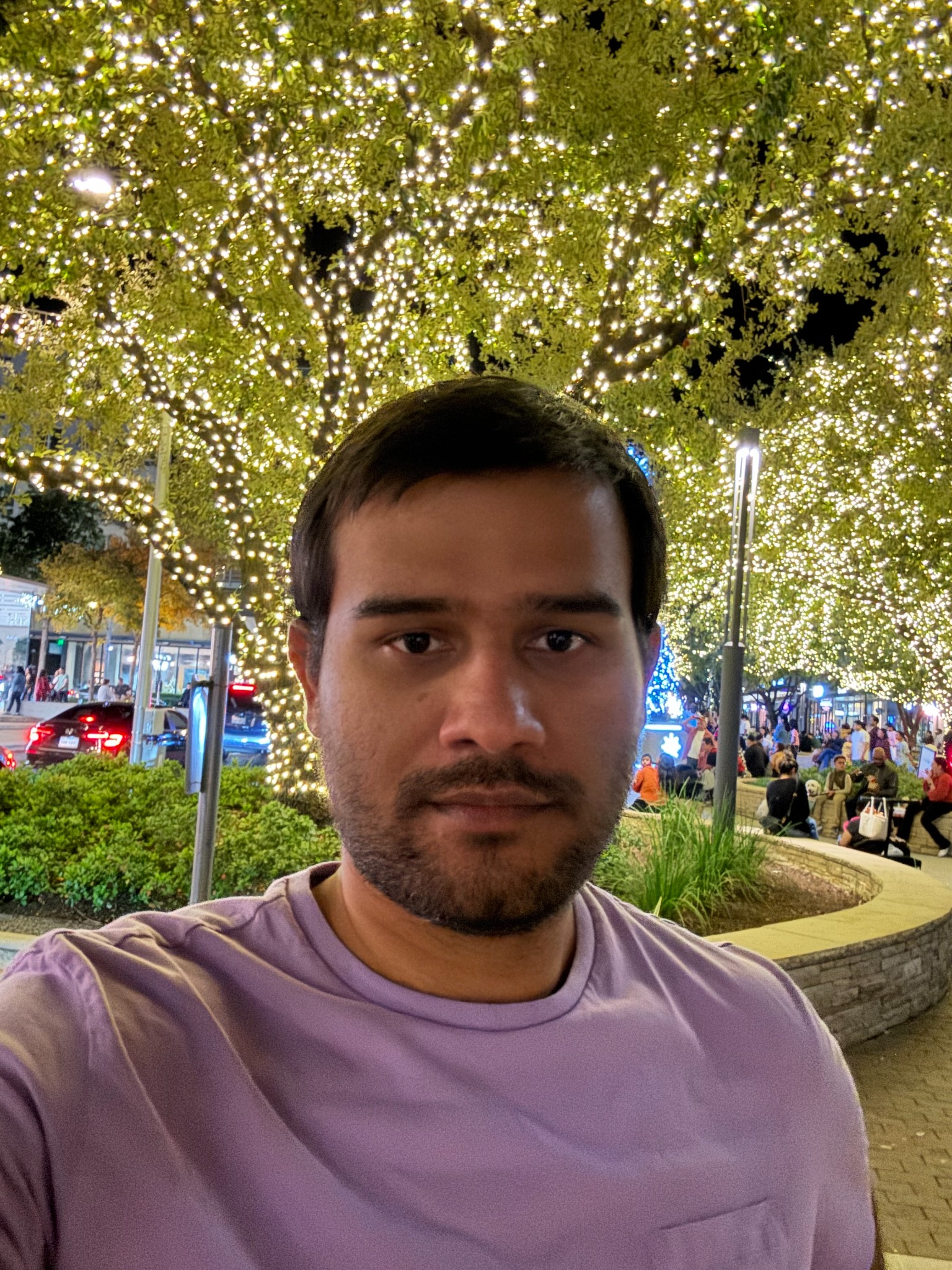
I’m a machine learning researcher at the University of Texas at Austin, working on neural reasoning and mechanistic interpretability. I study how models use additional computation, how their internal representations influence their answers, and how agents learn to coordinate. My current projects span recursive reasoning models, diffusion language models, and multi-agent reinforcement learning.
I’m a postdoctoral fellow at the Weinberg Theory Center and received my Ph.D. in physics from Stony Brook University.
Current research
When does another reasoning step help, and when has a model settled on an answer? I study the internal trajectories and stability of recursive neural models to understand how their computation comes to an end.
How much would a text predictor change if it learned from a different sample of the same data? I develop statistical forecasts of this disagreement and examine where they carry over to masked diffusion language models.
How can language-model agents learn when to think longer and when to work together? I study adaptive computation, credit assignment, and coordination under limited inference budgets.
Being able to read a concept from a hidden state does not show that it affects the answer. I use probes and activation interventions to test when intermediate representations matter.
Updates
New ML paper: Forecasting Corpus-Sampling Disagreement in Masked Text Reconstruction — forecasting how text predictions change across samples of a corpus.
New ML paper: When Recursive Models Finish Computing — understanding when recursive computation stabilizes.
When Should We Believe a Lens? — causal tests of when a readable representation begins to influence a model’s answer.
Selected work
Hare Krishna, Shubham Singh, Stephen Ebert, Hao-Yu Sun
arXiv preprint · September 2026 · arXiv:2609.26487Hare Krishna
arXiv preprint · October 2026 · arXiv:2610.12987Hare Krishna, Biswajit Sahoo
JHEP 11 (2023) 233Hare Krishna
JHEP 03 (2024) 176Hare Krishna, D. Rodriguez-Gomez
JHEP 11 (2021) 139Jay Bhambure, Hare Krishna
Preprint · arXiv:2412.08588Background
Weinberg Theory Center, UT Austin · Research on neural reasoning, corpus sensitivity, and learned representations.
C. N. Yang Institute for Theoretical Physics, Stony Brook University · Advisor: Prof. Martin Roček
Stony Brook University · Aspects of Holography in AdS and Flat Spacetime
IISER Bhopal · Holography for Non-relativistic Systems